

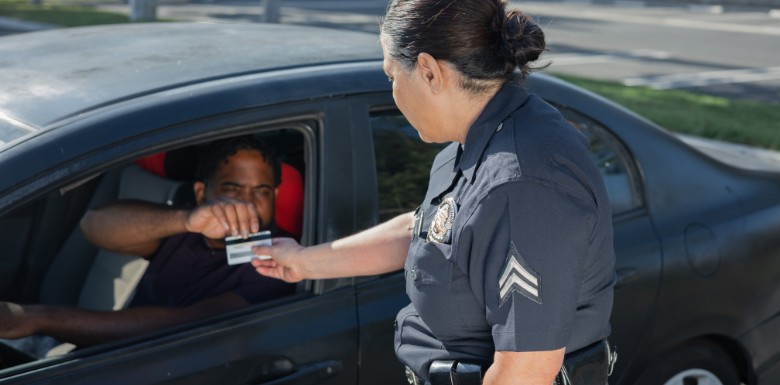
Blue lights flash in your rearview mirror. You pull over, answer questions, and the officer asks you to “run a few tests.” Most people assume they have no choice. In reality, you do.
In Texas, field sobriety tests are voluntary. You can refuse them without breaking the law. But that decision — and how you handle the stop — can have major consequences for your DWI case. If you’ve been charged with a DWI and you refused to do a field sobriety test, you need a DWI attorney to help with your defense.
Call (713) 673-8209 to schedule your free consultation.
What Texas Actually Requires in a DWI Arrest
Police can give lawful commands during a stop. You must show your license and insurance. You must step out of the vehicle if ordered.
You do not have to perform field sobriety tests. Texas law doesn’t require it, even on so-called “no-refusal” weekends.
If you politely decline, the officer can still arrest you based on other observations — but you’ve withheld evidence that might later be used against you.
Once you’re arrested, the situation changes: Texas’s implied consent law applies to breath or blood testing. Refusing those tests can lead to license suspension through the Administrative License Revocation (ALR) process, and police can obtain a search warrant for a blood draw.
Field Sobriety Tests in Texas
Texas officers use three standardized tests developed by the National Highway Traffic Safety Administration (NHTSA):
- Horizontal Gaze Nystagmus (HGN): Following a moving object with your eyes while the officer watches for jerking movement.
- Walk-and-Turn (WAT): Nine heel-to-toe steps down a line, a precise turn, and nine back.
- One-Leg Stand (OLS): Standing on one foot for about 30 seconds while counting aloud.
They sound straightforward, but the results depend almost entirely on the officer’s judgment. Uneven pavement, flashing lights, poor instructions, a bad knee, vertigo, or nerves can all be mistaken for intoxication. Even trained officers make errors in how they give or score the tests — and those mistakes become key points of attack in a DWI defense.
What Happens When You Refuse
Refusing field sobriety tests doesn’t make you immune from arrest. Officers can still rely on other indicators — the smell of alcohol, speech patterns, or driving behavior — to establish probable cause.
But your refusal denies them extra footage and “performance clues” that prosecutors love to use in court.
It’s also worth understanding what “no-refusal weekend” really means. It doesn’t force you to take a field test; it just allows officers to get faster warrants for blood samples if you refuse chemical testing after arrest. You always retain the right to decline roadside tests.
DWI Penalties in Texas
A DWI charge carries real weight, even for a first-time arrest.
- First Offense (BAC under .15): Up to 180 days in jail, up to $2,000 in fines, license suspension, and mandatory DWI education programs.
- BAC .15 or higher: Upgraded to a Class A misdemeanor, up to one year in jail, $4,000 fine, and ignition interlock.
- Aggravated factors: Prior DWIs, open container, child passenger, or a crash causing injury or death can sharply increase penalties.
Beyond court sentences, a conviction can raise insurance costs, affect job opportunities, and result in professional license issues.
How Do I Defend Against DWI Charges?
Every DWI case turns on the details — how the stop happened, how tests were performed, and how evidence was handled.
An experienced defense lawyer will:
- Challenge whether the officer had legal cause to stop you.
- Review video for errors in how the tests were given or interpreted.
- Examine breath-test calibration, maintenance logs, and observation periods.
- Audit blood testing for contamination, improper storage, or faulty lab work.
- Represent you in your ALR hearing to fight license suspension.
Each of these factors can determine whether evidence holds up — or collapses under scrutiny.
Why Houston Turns to Ned Barnett
Attorney Ned Barnett is board certified in criminal law by the Texas Board of Legal Specialization. He’s certified in field sobriety testing, breath testing, and gas chromatography — the science behind blood-alcohol analysis.
With more than 30 years of experience, including work as a state and federal prosecutor, Barnett knows how law enforcement builds DWI cases — and how to dismantle them.
He’s earned AV® Preeminent™ and Super Lawyers recognition for his ethics and results. More importantly, he knows how high the stakes are for his clients and fights for outcomes that protect their record, their license, and their future.
FAQs About Field Sobriety Tests and Texas DWI Law
Can officers record me during a field sobriety test, and does that video help or hurt my case?
Almost every patrol car and many officer body cameras capture video of roadside tests. That footage cuts both ways — it can expose poor instructions, bad conditions, or how calm and coordinated you were. A defense lawyer can often use the same video the state relies on to dismantle its case.
Are field sobriety tests admissible in court?
They are, but the value of that evidence depends on whether the officer followed strict federal (NHTSA) guidelines. If the officer deviates — unclear instructions, no demonstration, improper timing — the results lose credibility fast. A defense attorney can file motions to suppress or limit how the tests are presented to a jury.
Do officers have to tell me I can refuse a field sobriety test?
No. They’re not required to explain that it’s voluntary, and many won’t. They can even make it sound like a command. Knowing that you can decline is part of understanding your rights — something the average driver doesn’t realize until it’s too late.
What if I have a medical condition that affects balance or eye movement?
Conditions like vertigo, neurological disorders, diabetes, or fatigue can mimic signs of intoxication. Documenting those issues early, and having a defense attorney raise them, can neutralize the officer’s “observations.” Medical records often become powerful evidence in suppression or trial strategy.
Can a DWI charge be reduced if field sobriety tests were flawed?
Yes. Weak or improperly conducted field tests can open the door to negotiations — from dismissals to reduced charges like reckless driving or obstruction of a highway. Prosecutors know that shaky roadside evidence can fall apart in front of a jury.
How do “field tests” differ from the breath or blood tests I hear about?
Field sobriety tests are physical coordination exams. Breath and blood tests are chemical analyses used after arrest. They’re governed by separate laws, with separate rules for consent and evidence. One tests balance; the other measures chemistry — both can be challenged differently.
If I refused the tests, can that refusal still show up in my record?
The refusal itself isn’t a criminal offense, but it will appear in the DWI arrest report and possibly in an ALR license hearing. It’s not a conviction or an admission — just a data point. With strong representation, it rarely becomes the deciding factor in court.
Why do officers rely on tests that aren’t fully accurate?
Because they’re trained to. The NHTSA manual treats field sobriety tests as “indicators,” not proof. But in practice, many officers treat them as gospel. DWI defense lawyers spend a lot of time exposing that gap — the difference between training and reality.
Can a lawyer challenge a DWI arrest even if I failed the tests and blew over the limit?
Absolutely. The legal process isn’t about one data point — it’s about procedure. If the stop, detention, testing, or evidence handling violated your rights or deviated from protocol, your attorney can move to suppress key evidence. Many cases with “failed” tests end in dismissals or reduced charges.
Call a Houston DWI Attorney Now
If you’ve been arrested after a DWI stop in Houston or surrounding counties, get legal help right away. Call (713) 673-8209 or contact the Law Offices of Ned Barnett for a free, confidential case evaluation.
The sooner your defense begins, the more options you’ll have to protect your rights and your future.